“A brochure is not enough” – how an integration seminar helps holders of international protection find their way
.jpeg)
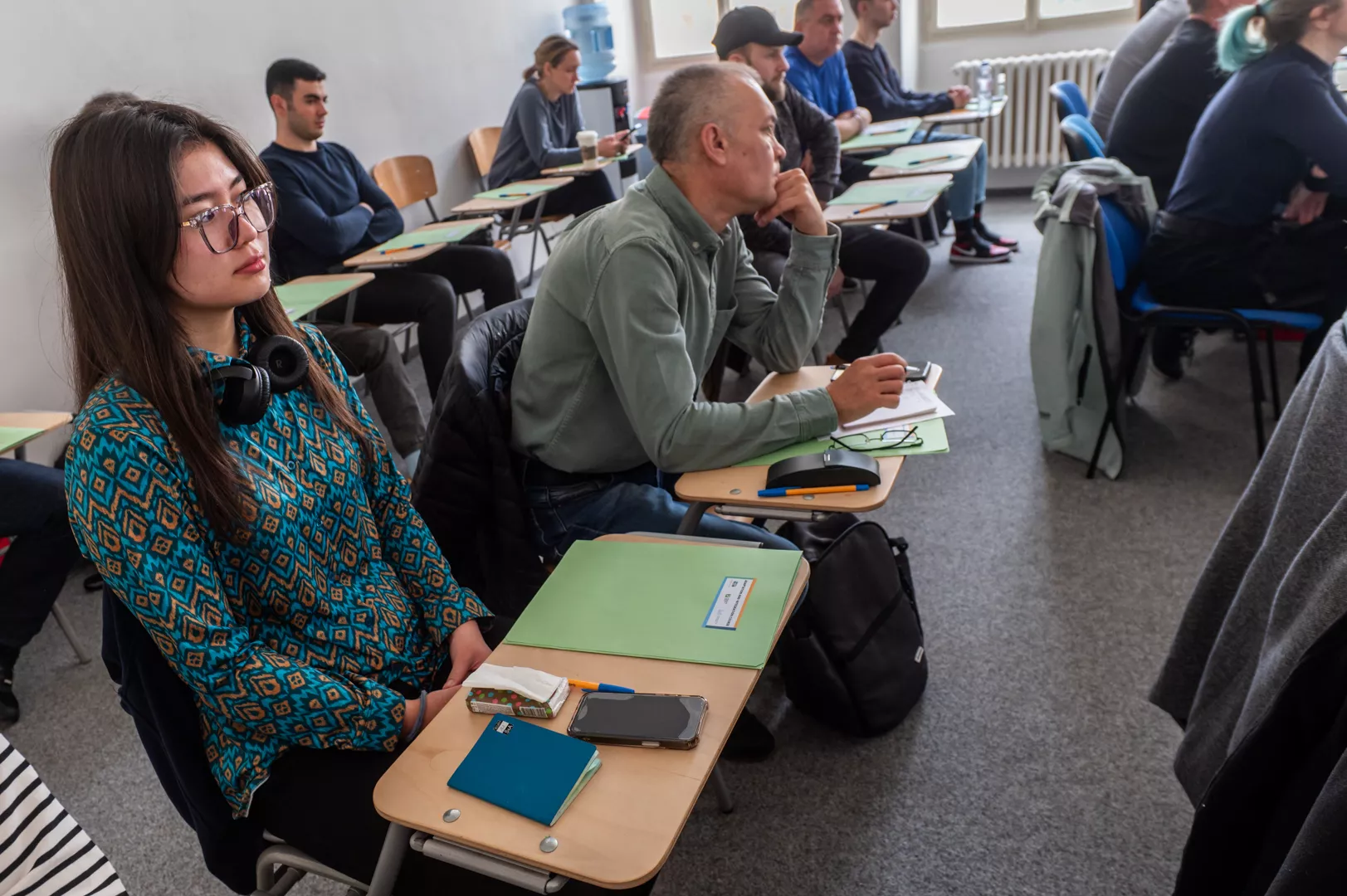
The first two integration seminars have taken place as part of the New Home in the Czech Republic project. One was for Russian-speaking and the other for Chinese-speaking holders of international protection. The seminars are designed to help this specific group better navigate their basic rights and obligations in the Czech Republic and offer a helping hand at a time when newcomers are often left on their own without the necessary information.
Holders of international protection in our country face an uncertain future. The burden of traumatic experiences and emotional exhaustion, a lack of information, or the customs of a new country are just some of the difficulties they face every day. The eight-hour integration seminar is designed to help newcomers navigate areas such as the social system, housing, transport, and job hunting. The first two meetings opened their doors to eighteen participants during September and October.
The seminar is led by two instructors and two interpreters. One of the instructors, Pavla Yakymchuk, describes holders of international protection as a specific group that requires care and attention: “Holders of international protection have been granted protection in the Czech Republic because they faced danger and persecution in their country of origin. They may have been politically persecuted, in danger of losing their lives, and so on.” This is why the New Home in the Czech Republic project plays an important social role that can fundamentally simplify the integration of these people into mainstream society.
The meeting for Russian speakers was held in person, while the seminar for Chinese speakers took place online. Yakymchuk explains why the online version was chosen: “Given the group—citizens of China—this format seemed more appropriate. Chinese people are very concerned about their safety and anonymity, so one of the conditions for their participation in the course was to remain as anonymous as possible to the other seminar participants.”
“During the online course, all the participants' windows remained blacked out. Even so, the other instructor, the interpreter, and I felt a pleasant atmosphere.”
The instructors also received positive feedback from the in-person group: “I enjoyed working with the Russian speakers; the seminar was live and pleasant, and people had the opportunity to see each other and get to know one another, which is also one of the secondary goals of the meetings. I think the sense of safety that the other instructor, the interpreters, and I managed to create played a role.”
The positive feedback on both courses is a promise for future rounds of seminars. The instructor concludes her assessment of the New Home in the Czech Republic project by speaking about the benefits it provides to holders of international protection:
“In real life, it is not enough to just hand holders of international protection a brochure with information; it needs to be explained, translated into the participants' real lives, and we need to help them apply these realities to their specific lives and the problems they encounter.”
The New Home in the Czech Republic 2024-2026 project is co-financed by the European Union.
Our Partners

Related projects
Your New Home in the Czech Republic
An unfamiliar country, traumatic experiences, emotional burden, a lack of information, and an uncertain future: these are all challenges faced by holders of international protection. Through our integration seminars and a comprehensive publication, we strive to provide sensitive support to help them integrate into Czech society.