"I read it, and they were laughing their heads off." Marwan Alsolaiman's new book brings a contagious sense of lightness.
November 13, 2024
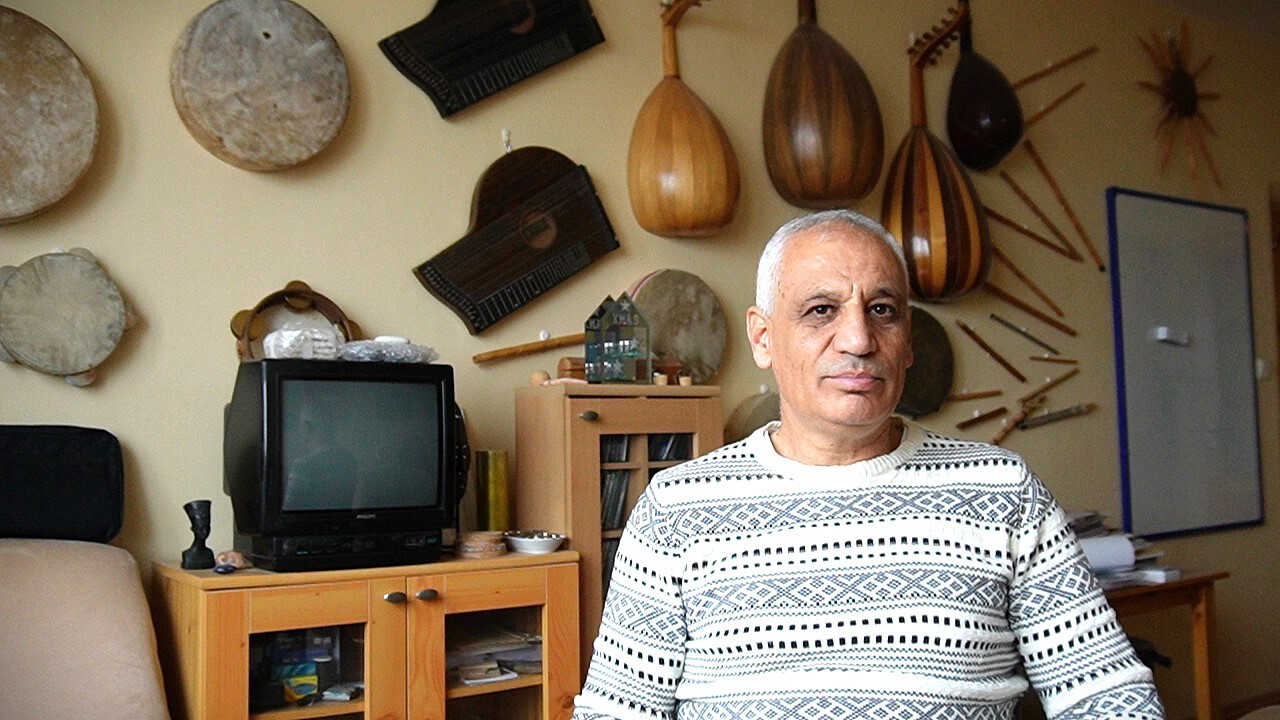
This November sees the release of a new book by Syrian-born author Marwan Alsolaiman Czech: From I Don't Understand to I Don't Understand. Marwan is a musician, poet, Czech language teacher, and engineer who graduated from the CTU. His book offers a sensitive look at his own experience navigating the challenges of a new culture. The humor with which he describes the inscrutability of Czech customs shows readers how to laugh at themselves. Through wordplay, he explores what the idioms we take for granted reveal about us.
Where did the initial idea to publish your texts as a book come from?
It wasn't intentional. I never planned anything like that. I happened to be teaching Arabic at a school in Prague 6. During the Christmas season, they wanted to host a party for the students, and the principal asked if I could organize something cultural. I thought I would explain some Czech expressions, such as To come by something like a blind man to a violin or It's all Greek to me and so on. So I sat down at my desk and started writing. The first phrase I started with was Ty vole. And I explained it in a humorous way. Before the Christmas party, I managed to finish three such expressions, and when I read them there, everyone went crazy laughing. That’s how it started. And then it gradually escalated into the form it has today.
Are you looking forward to the book launch?
I’m definitely looking forward to it because there will be so many friends there who helped me a lot. Both my Czech friends and all the friends who helped me better understand those expressions. I’m looking forward to it because I assume everyone will be there, and it will be a great joy. The book launch will take place on November 23rd of this year, of course. At the D21 theater in Prague 2 on Záhřebská Street. It’s up the stairs, I’m telling you in advance. There are about twenty steps up, so you have to be careful. Come and see. It will be nice there. There will be music, readings, humor, and, of course, food.
Do you feel that the book has also helped you better understand the elusive Czech nature you are trying to capture?
Well, the book certainly helped me understand the Czech character. But that’s not enough; it’s just one element through which you get to know Czech society and Czech thinking.
You have established yourself in the Czech Republic as a musician. From the beginning, you shared your texts with audiences through recitation during your concert performances. Was this contact with the audience important to you?
It all really started when František Kostlán and I were working on a long-running program called Circle Around the Fire. It took place once a month, and we would invite friends, musicians, poets, and so on. That was where I started reciting these expressions. I don't want to say I was testing them out. No, it just happened naturally. František wanted me to read them to the audience. And it got a great response.
So you noticed that the audience enjoyed it?
They do, very much. And I’ve repeated some of the expressions maybe fifty times, and the response is still the same, inexplicably. (laughs)
In the book's foreword, Lucie Němečková wrote about you: "He views the obvious things in life with a youthful, unburdened perspective, as if they were miracles." The lightness with which you perceive the world around you is very present in the book. Where do you find this lightness?
Thank you so much for that. Perhaps it’s because I don’t plan anything. Everything comes on its own from all directions—whether it’s culture, work, or teaching. I don’t know if I’ll have the same mindset next month at six o’clock to, say, perform. Sometimes you have to; I understand that organizational matters require some planning. But I don’t plan anything for myself. When something comes naturally, I let it carry me, and that’s when inspiration strikes. If I have any advice, I think it’s not to complicate your life. Some things in life happen without us anyway. Whether you protest or not, the matter will move forward regardless. Being simple—that’s all I can suggest.
Besides writing, you are also a musician. But you studied at the CTU. What do you feel like most?
I look at it all as one thing because it’s all closely connected. Physics or statics, music, astronomy, language—they are all vibrations, and I wouldn’t prioritize one thing at the expense of another. When it all works together, that’s when I feel at home. I can’t do just one thing my whole life. I can’t just play, or write, or teach. The miracle is that when everything happens simultaneously, it brings me joy, and it’s a plus for everything involved.
The publication of this book was financially supported by the Prague City Hall.