Romani People
Romani Youth in Action: Through Culture Against Antigypsyism
.png)
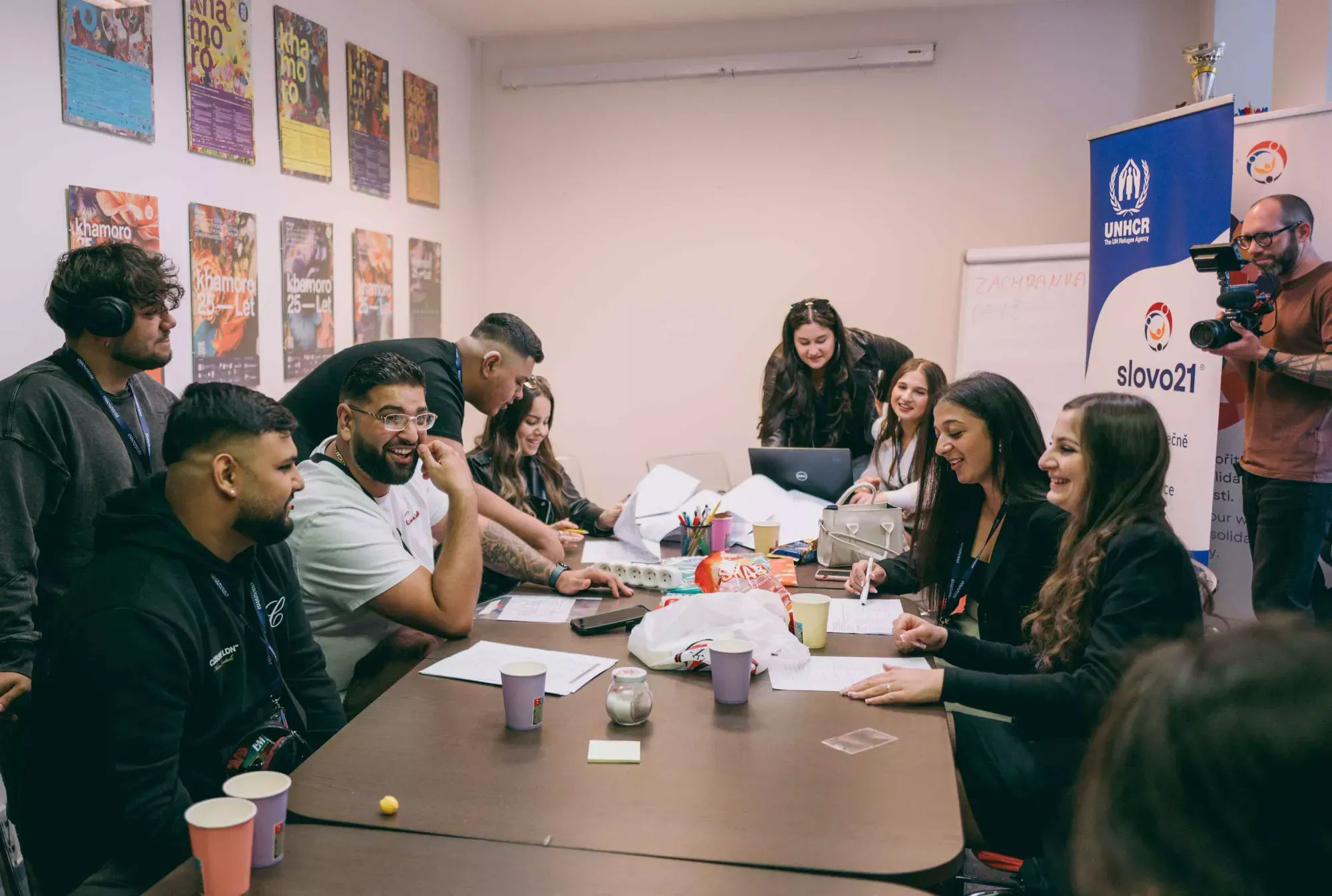
We want young Roma to be heard more. Not from the audience, but from the position of those behind major cultural events. We already have experience with this. Over the last 10 years, through our "Khamoro Shares Experience" program, we have trained dozens of young Roma from the Czech Republic in cultural management and taught them how to organize Khamoro, the largest Roma festival in the world. Now it is time to share our know-how further – to all countries of the Visegrád Group. It is not just about new knowledge. It is about young Roma gaining self-confidence, being proud of their heritage, and becoming true leaders.
- We will involve young Roma aged 15–30 from the Czech Republic, Slovakia, Hungary, and Poland in cultural management training.
- Across the Visegrád countries, we will train a new generation of Roma leaders who will gain a solid foundation for organizing cultural events at a professional level.
- By gaining experience in cultural management, we will strengthen their chances in the job market – and not just in the cultural sector.
- It is not just about new skills. We want to boost the self-confidence of young Roma and remind them that they can be rightfully proud of their Roma heritage.
- Culture has the power to change perspectives. And young Roma who learn how to professionally organize cultural events will become the agents of this change.
What exactly do we want?
To involve Roma youth from the Czech Republic, Slovakia, Hungary, and Poland in intensive cultural management training. Young Roma from the Visegrád Group countries will gain knowledge on how to prepare a professional cultural event, from program planning and financial securing to promotion. We place emphasis on the practical side so that everyone can test their new skills firsthand – directly at the world's largest Roma festival. The program is designed to provide young people with a high-quality foundation for their future professional careers and their own cultural projects. We want to create a new generation of young Roma who can professionally organize cultural events in their regions.
Why is this important?
We believe that culture is a powerful tool in the fight against anti-Gypsyism and a way to strengthen the self-confidence and identity of the Roma. An estimated 1.5 million Roma live in the Czech Republic, Poland, Hungary, and Slovakia, and they continue to face anti-Gypsyism. The statistics are clear: 41% of Roma have experienced discrimination in the last 5 years. In such an environment, it is difficult to build self-confidence and be proud of one's roots. One way to change this is through culture. Moreover, when young Roma gain the opportunity to organize and present culture themselves, they bring not only art but also a positive change in the perception of the Roma community. It is not just about acquiring new knowledge, but also about making a concrete contribution to the fight against anti-Gypsyism.
What lies ahead?
The entire project will launch in January 2026 and run until the end of June 2027. We will begin with introductory workshops in Poland, Hungary, and Slovakia, where participants will gain their first experience in cultural management. Then, everyone will meet in Prague during the Khamoro festival for intensive training and direct work within the festival's organizing team. They will learn what production, media communication, and fundraising entail – and try it all out on a real project. And that is just the beginning. Upon returning home, each participant will organize their own cultural event in their community with the support of mentors and project funding. They will gain experience and self-confidence that no one can take away from them.
Who are our partners?
- Uccu Roma Informal Educational Foundation (Hungary)
The foundation was established in 2010. It organizes educational activities across Hungary that foster dialogue between Roma and the majority society, break down prejudices, and promote tolerance through intercultural dialogue and non-formal education. Their thematic workshops, led by Roma youth, provide insight into Roma culture, identity, and history, thereby cultivating more open and inclusive attitudes. At the same time, the organization nurtures a new generation of Roma leaders, placing a strong emphasis on developing their skills and self-confidence. www.uccualapitvany.hu
- Stowarzyszenie Jududoro (Poland)
Jududoro supports the Roma community and other marginalized groups, primarily in the areas of education and employment. They organize educational and artistic projects, such as International Roma Day celebrations, as well as workshops on Roma cuisine and dance. They also provide professional training aimed at empowering individuals, promoting social inclusion, and developing job skills. They regularly involve volunteers in their activities. https://www.facebook.com/people/Stowarzyszenie-Jududoro/100090676381796/
- In Minorita (Bratislava, Slovakia)
The In Minorita civic association was founded in 1999 and focuses on minority issues, particularly those concerning the Roma. It has long monitored the situation of the Roma in Slovakia, influences public opinion, and engages in publishing activities. Since 2005, it has been implementing the Ma bisteren! project, which commemorates the Roma Holocaust and combines memorial events with non-formal human rights education. In Minorita is also behind a number of cultural and educational activities—from the Minority Cultural Summer festival to the discussion series "With Minorities about Minorities." www.romaholocaust.sk
Our goals at a glance:
- Support Roma youth in cultural leadership across V4 countries
- Provide participants with training, practical experience, and mentoring in cultural management so that young Roma learn how to organize cultural events at a professional level.
- Support the creation of participants' own cultural events in their local communities under the guidance of experienced mentors and with financial support from the project.
- Increase self-confidence and strengthen Roma identity through pride, visibility, and a sense of belonging.
- Combat anti-Gypsyism in society through culture that challenges stereotypical views held by the majority and showcases the diversity and quality of Roma traditions and contemporary art.
- Improve the employability of Romani youth in the labor market through the knowledge and experience gained in cultural management.
- Expand the Khamoro Shares Experiences program from a national to an international level and share best practices among V4 countries.
- Ensure the long-term impact of the project so that participants continue to organize high-quality cultural events even after the project concludes.
Lead Project Coordinator: Jana Hejkrlíková: jana.hejkrlikova@slovo21.cz
The project is co-financed by the governments of the Czech Republic, Hungary, Poland, and Slovakia through Visegrad Grants from the International Visegrad Fund. The mission of the fund is to promote ideas of sustainable regional cooperation in Central Europe.

Khamoro shares experiences. We teach young Roma from all over Europe how the largest Roma festival is made.
Culture changes perspectives. It breaks down prejudices and gives a voice to those who are often left on the sidelines. Yet, young Roma people are still more often spectators than creators. We want to change that. That is why, for several years now, Slovo 21 has been opening the doors to the backstage of the largest Roma festival in the world – Khamoro.