168 stories of a new beginning. After two years, project Your New Home in the Czech Republic is coming to an end.

A new beginning brings with it many questions and uncertainties. That is why, through the project Your New Home in the Czech Republic, we helped people with international protection find their way around the Czech Republic. Open communication, handled with sensitivity and empathy, often played a key role on the path to integration. As did the opportunity to ask about anything. After two years, the project Your New Home in the Czech Republic is coming to an end, and we are looking back at everything it achieved together with the project's methodologist, Veronika Slavíková.
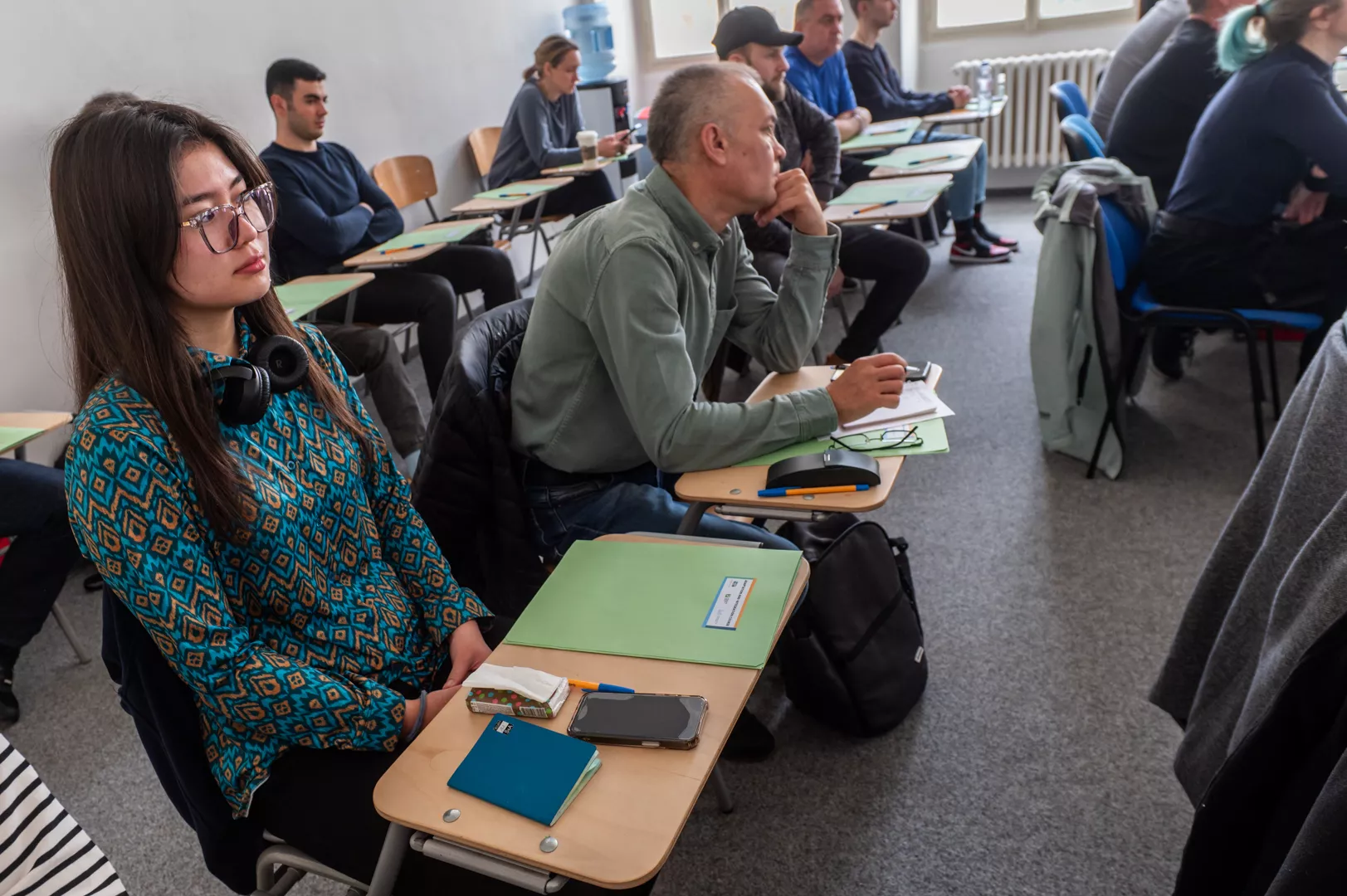
"Basically, every single course ended with participants feeling enthusiastic that they had finally received some practical information," says Veronika Slavíková, summarizing the feedback. She was involved in the project from the very beginning as a methodologist and member of the expert group. Over the two years of the project, 21 integration seminars were held, with a total of 168 participants. Most of the courses took place online, which allowed people from all corners of the country to join. The diversity of nationalities ranged from China to Afghanistan, Ukraine, and Rwanda. "As an impartial organization, we had the opportunity to step in and offer: Ask whatever you want. That had a huge impact on how open the recipients were to communicating their needs and opinions." She adds in the same breath that, unfortunately, the course often reached foreigners only after months or years of waiting in the Czech Republic for their international protection to be granted. "But even after those years, the course always brought them a lot of new information, which highlights not only the quality of the course but also the life situation these people are in, which prevents them from obtaining information on their own through other channels."
Holders of international protection are accompanied by the stress and trauma of leaving their home countries, and finding a new refuge is complicated by the need to prove that you were truly in danger in your home country and are entitled to international protection. "Sometimes it is quite difficult to prove that the harm was directed at you personally. When you are fleeing, it doesn't always occur to you to take evidence with you, such as medical reports... Likewise, you cannot just call Belarus and say: Hey Belarus, send me proof that you are persecuting me." These people are also often afraid for their safety in their new country and are very careful about protecting their privacy. This is one reason why online courses were a good option for them to remain as anonymous as possible. "There were situations where an entire family sat at one computer. Or, for example, we were with a man in a crane. He simply didn't have the option to take time off, so he logged in while working in the crane. Or a man who sold kebabs. I would just see him working, and suddenly he would hear something that interested him, so he would turn on his microphone and ask questions. These people were often truly capable of putting in a lot of effort just to be able to participate."
According to Veronika Slavíková, the courses were unique because they managed to maintain an individual approach and help with specific questions and problems. In this way, 168 people had the opportunity to pass on new information within their communities. Thanks to the courses, it was possible to reduce uncertainty and make the Czech Republic at least a slightly clearer and more understandable place to live for holders of international protection. Although the project has ended, the need to provide quality information and support those arriving in the Czech Republic has not disappeared. In the future, we would primarily like to offer support to applicants for international protection as well, so that the necessary help reaches foreigners as soon as possible.

Related projects
Your New Home in the Czech Republic
An unfamiliar country, traumatic experiences, emotional burden, a lack of information, and an uncertain future: these are all challenges faced by holders of international protection. Through our integration seminars and a comprehensive publication, we strive to provide sensitive support to help them integrate into Czech society.