"For the first time, Roma children spoke openly about their origins." – A conversation with Robert Tonelli about the Khamoro Kher program
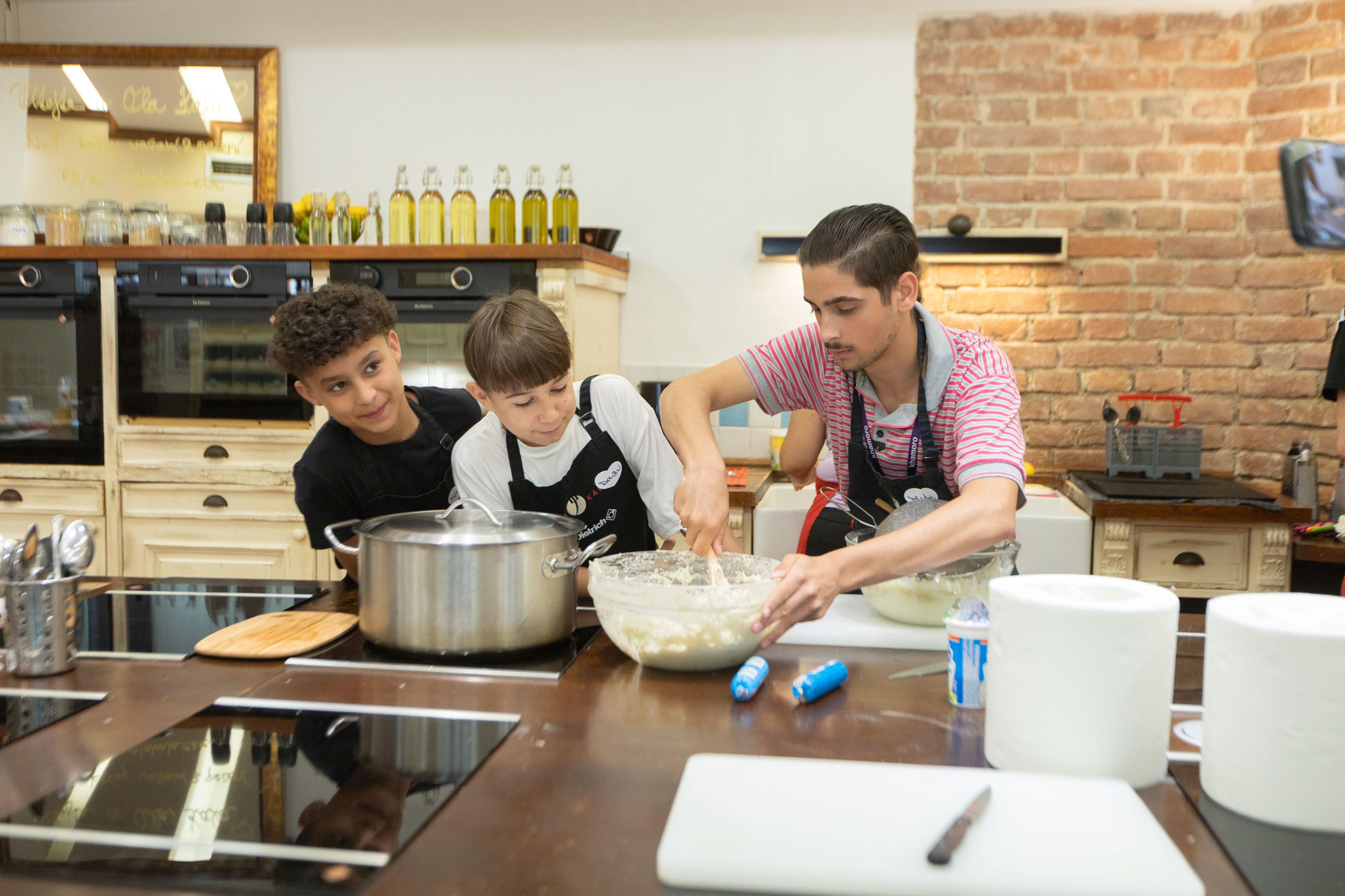
Who am I and where do I belong? For many Romani children growing up in children's homes, these questions are far from straightforward. They lack contact with their families, their own history, and their culture. This is why the organization Slovo 21 created the Khamoro Kher project, which allows them to experience Khamoro—the largest Romani festival in the world. Experiential activities and cultural events show the children that they truly have something to be proud of. In 2026, 10 children from two children's homes participated in the program. Regional program coordinator Robert Tonelli, who grew up in a children's home himself, now serves as a mentor for the children during the festival. In this interview, he talks about the meaning he finds in his work and the process of discovering his own Romani identity.
Do Romani children in children's homes have any opportunity to be in contact with Romani culture at all?
Children's homes do an incredible amount of work, and their primary task is to ensure the children's safety, stability, and daily care. I believe they simply don't have the time, space, or funding for targeted work with Romani culture or history. As a result, Romani children growing up in institutional or foster care very often grow up without deeper contact with their culture and identity. They often lack the opportunity to learn about positive role models from the Romani community or to speak openly about who they are and where they belong. Yet, identity is a crucial part of personal development for every human being.
Is Romani identity something that children actively think about?
I think that for Romani children growing up in children's homes or foster care, the question of identity arises sooner or later. It often comes in the form of natural questions: Who am I? Where do I come from? Where do I belong? Romani identity is not just a matter of ethnic origin; it is a relationship with one's own history, culture, and national pride. For many children, it is not easy to find answers to these questions because they often lack the opportunity to do so.
What was the group like at this year's Khamoro Kher?
This year's group of children was truly exceptional. Even though most of the children did not know each other before the program began, a friendly atmosphere formed among them very quickly. They were primarily united by a great interest in Romani traditions and learning about their own culture.
What activities did you have prepared for the children this year?
The Khamoro Kher program this year was designed as a combination of educational and experiential activities. I would like to highlight two of them. Cooking Romani dishes with a Romani chef, who introduced them to the world of traditional Romani cuisine, was a great success. The lecture on Romani history presented by Michal Mižigár also sparked a lot of interest. The children also enjoyed a Romani dance workshop, but they truly liked everything. The program is designed to be engaging and beneficial for all participants.
Do you observe any changes in how the children think about themselves when they leave Khamoro Kher?
It is still too early for any formal evaluation. But I know that the children left with new experiences, a greater interest in their own identity, and the feeling that they are not alone. Many of them spoke openly about their background or questions they hadn't been able to name before for the very first time. Meeting successful Romani people and students was also very significant for them. Suddenly, they saw real people who had succeeded despite various obstacles and who could serve as inspiration for their own life paths. If I had to describe the one idea that the children take away from Khamoro Kher, it is the realization that their background is not an obstacle.
How did you get involved with the project?
I became involved with Khamoro Kher in 2015, the year the first edition took place. Jelena Silajdžić, the director of the organization Slovo 21, approached me with an offer to help implement and lead it. The project's vision resonated with me from the very beginning. Over time, I developed a strong personal connection to Khamoro Kher. I truly appreciate that Slovo 21 has been running this unique project for so many years. Today, it is a cause very close to my heart.
Are you involved in working with the Roma community through any other activities?
I grew up in a children's home from a very young age. When I was twelve, I attended a special school. I couldn't read or write properly, I stuttered, and I was searching for answers to a lot of questions. It wasn't an easy path. However, I was very lucky—I was taken in by a foster family that offered me love, support, and care. Thanks to them, I was able to finish high school and later university. It was this life experience that led me to found the organization SPOLEK BOBEŠ z.s., which helps at-risk children find a safe and loving family environment. We want children growing up in institutional care to have the same chance that I once had. Beyond that, I have long been dedicated to activities focused on supporting the Roma community, education, and working with young people. I am convinced that every educated Roma person should contribute to the development and support of their community as much as they can and help open doors for the next generation.
What was your own journey toward discovering your Roma identity?
Identity is one of the most important topics in my life. Today, I know exactly who I am and where I belong, but the journey to this realization was not easy at all. On one hand, I faced prejudices from the majority society, and on the other, I sometimes felt a sense of distance from other Roma people because I grew up outside the Roma community. I gradually understood that identity is not just about where we come from, but also about the values we hold, the life we lead, and the path we choose to take. That is exactly why I understand the children going through all of this so well today. I know how important it is to have someone to talk to, to look for answers, and to meet people who have walked a similar path before you. That is why I try to help Roma children in children's homes.
Is Khamoro Kher something you would have appreciated as a child?
Definitely. I spent a long time searching for my own identity, and I was often on my own. No one helped me with it. Children in the Khamoro Kher program have the opportunity to discover their culture and themselves. They don't have to wander or struggle to find complex answers to the questions I once asked myself.
The Khamoro Kher program is financially supported by the Tereza Maxová Foundation for Children and the Committee of Good Will – Olga Havel Foundation. Thank you!
Related projects
Khamoro
Khamoro (Romani for "little sun") is the largest and most famous professional Romani festival in the world, organized in Prague since 1999 by the organization Slovo 21 in collaboration with Studio Production Saga. Khamoro offers unique concerts, exhibitions, film screenings, dance workshops, literary readings, alternative performances, and professional seminars and conferences.
%20(1).jpg)