Two years of war in Ukraine: Slovo 21 has helped more than 16,000 refugees
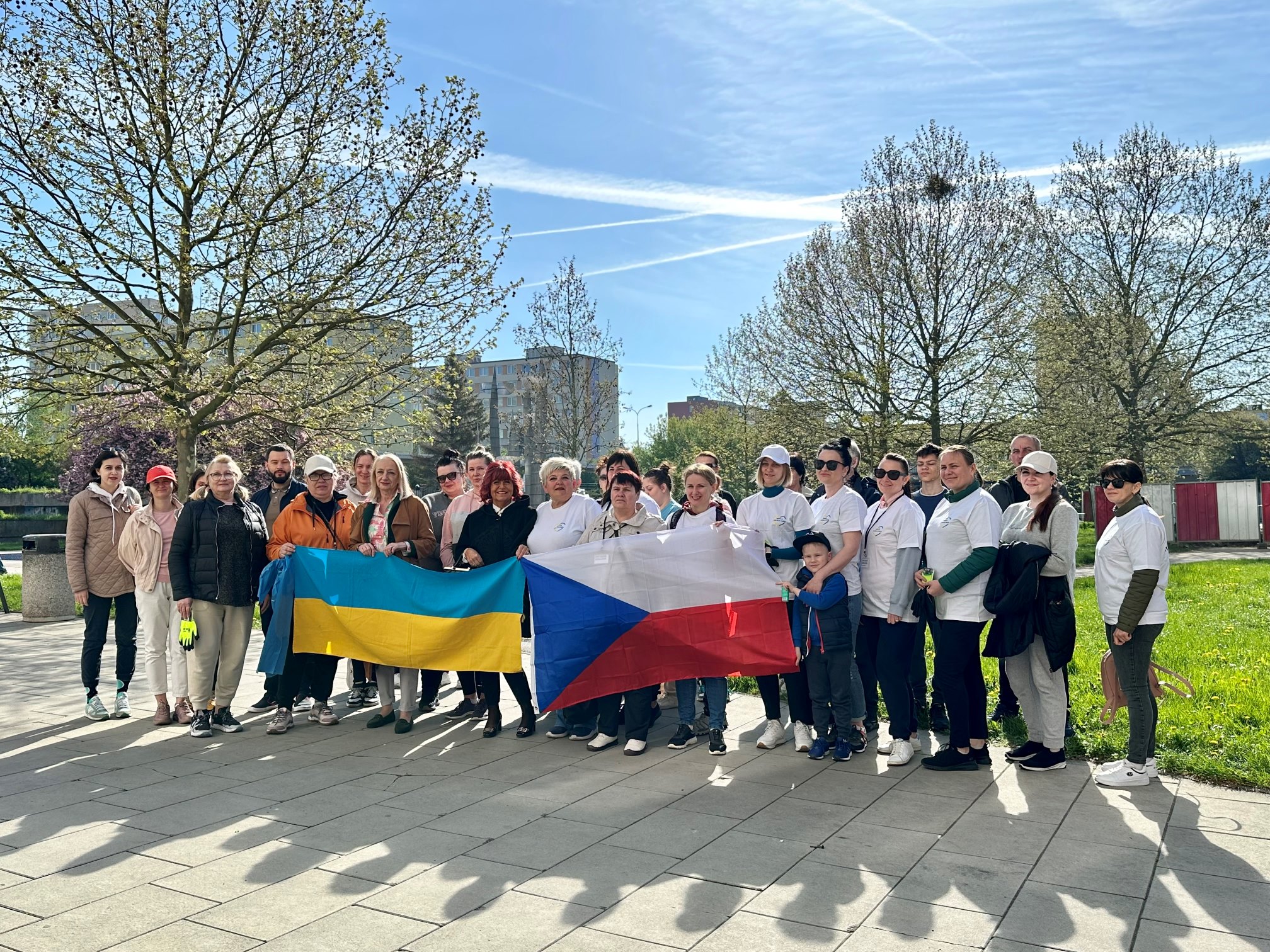
We cannot ease the horrors of war, but since the beginning of the Russian aggression in Ukraine, we at Slovo 21 have been doing what we do best: helping those in need. Our experience with this war is all the more painful for us, as many of us personally experienced what it is like to be a war refugee in the 1990s. Since the start of the war, we have managed to help 16,400 refugees.
How exactly do we help?
Finding your way: there is a lot of information everywhere, but not all of it is verified or, more importantly, up to date. We manage the Refugee Info Czechia website and organize information sessions tailored to the needs of war refugees.
Learning the language: at the beginning, it was just a few words, simple sentences, and a lot of grammar; today, we organize informal conversation courses to help refugees start speaking Czech.
Finding a job: our assistants help refugees find legal employment while warning them against the unfair practices of recruitment agencies.
Living a cultural life: Listening to a concert, attending a theater performance, taking a breath. Life in the Czech Republic should also be about joy. We organize various cultural and public events that allow people to forget about their life's hardships, at least for a moment.
Our aid to refugees in numbers
• 3,100 people received humanitarian aid
• 6,000 refugees attended information sessions
• 1,400 refugees completed Czech language courses
• 460 people were provided with interpreting support
• 1,300 refugees participated in research we are conducting in collaboration with Charles University
• 970 people found employment thanks to our help
We couldn't have done it alone
Our assistance has evolved significantly over the past two years. We have shifted from providing acute humanitarian aid and finding housing to assisting refugees in their job searches, providing interpretation services, and building their confidence in speaking Czech through our language courses. None of this would have been possible without our partners, as Amra Mešić, coordinator of aid to Ukraine at Slovo 21, explains: "Thanks to close cooperation with organizations such as UN agencies, the IRC, ERGO, People in Need, the City of Prague, and the King Baudouin Foundation, we were able to reach and provide essential support to 8,500 people in 2023." The figure was similar in 2022, specifically 8,000 people. "Looking back at the past year, we can see that the joint commitment of our partners and our team played a key role in providing help, comfort, and hope to those who needed it most," says Mešić.
How will our assistance continue?
When people first arrived in the Czech Republic, they hoped it would only be for a few weeks, or months at most. At that time, they didn't want to change anything in their lives because they didn't plan on staying. For us, the most important thing then was to provide immediate help so that refugees had a place to sleep and knew where to find the Regional Assistance Center for Ukraine to apply for temporary protection.
Today, however, the situation is different. The war will likely last a long time, and those who are currently remaining in our country—estimated by the Ministry of the Interior to be around 325,000 refugees—need to find work and learn the language. For children, it is essential that they successfully start school and manage to integrate into their peer groups. "Our activities are shifting in that direction to match the current needs of refugees and the mood of Czech society. It is no longer just about welcoming refugees, but also about understanding each other and being mutually tolerant," adds Amra Mešić.
For example, we organize discussions on migration in schools so that children can understand what it is like to suddenly find yourself in a different country. Based on the stories of Ukrainian women, we also created the theater performance *Svetlana*, which allows the audience to experience what it is really like to be a refugee. No one knows when or how the war will end. But what we do know is that our commitment to supporting vital partnerships, leveraging shared resources, and persistently continuing our mission to bring positive change to the lives of people affected by the Ukrainian crisis remains unwavering.
