When empathy helps: hundreds of officials, police officers, and firefighters are learning to communicate more effectively with foreigners thanks to Slovo 21
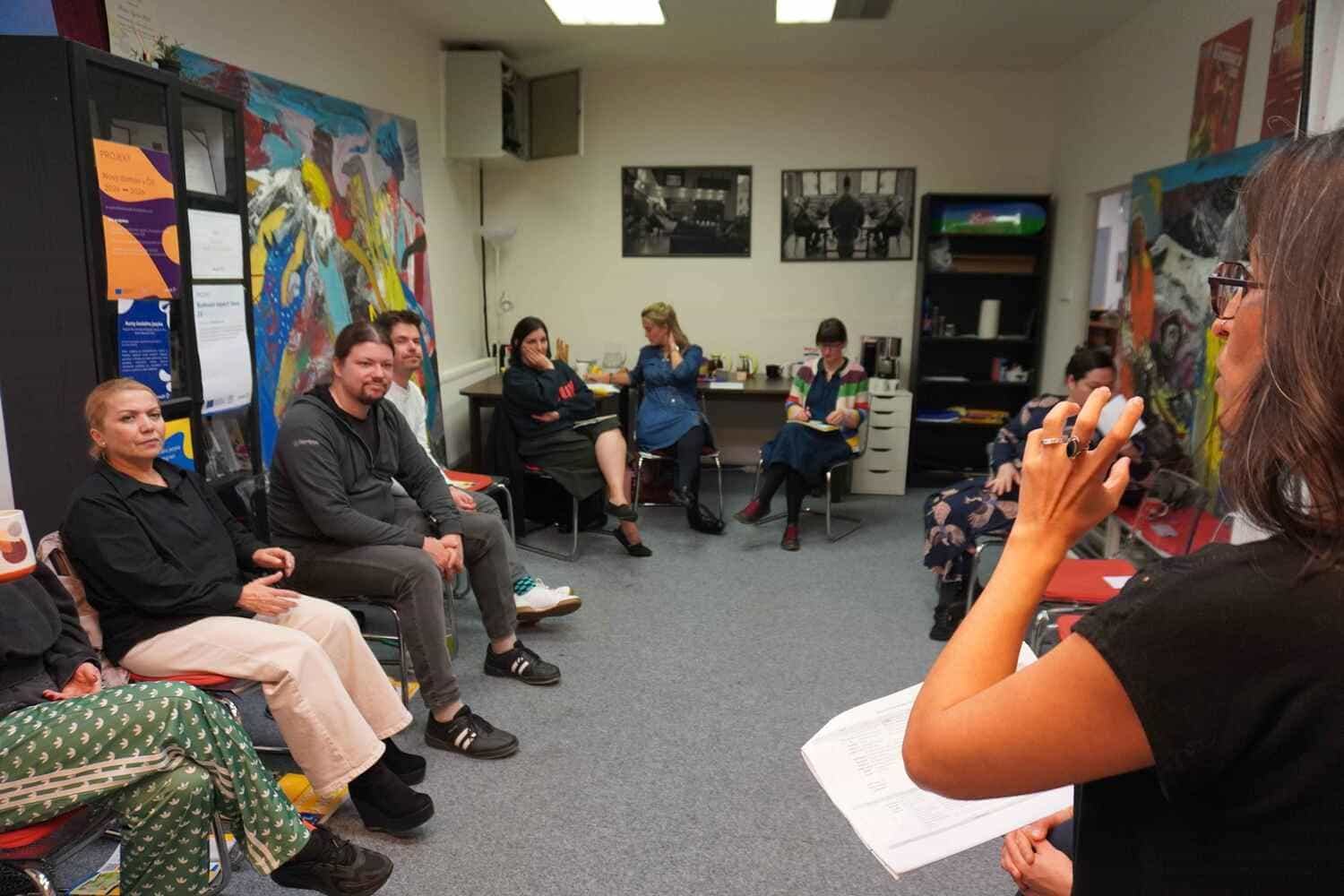
Less tension, more understanding. Sooner or later, every migrant in a new country encounters officials – at the foreign police, the labor office, or municipal authorities. However, the barrier between an official and a foreigner is not just the counter. It is often created by language barriers and cultural differences. Slovo 21 helps overcome these through special training as part of the Strengthening Intercultural Competencies project. They show officials how to speak with foreigners more openly, with greater understanding and respect. Ultimately, this contributes to better mutual understanding. What do the participants themselves say about the training?
This training was worth it
"Surprisingly, it was a very pleasant way to spend time. Surprisingly, because no one was very keen on it at first. You go through many of these trainings and tend to be skeptical," admits one participant who works at the State Labor Inspection Office with a smile. "But this training was worth it. The energy of the instructors was the reason I considered it time well spent," he adds.
The basic training for the Strengthening Intercultural Competencies project lasts two days, and officials often attend it as a mandatory requirement. The instructors must adapt their approach to the group accordingly. It is not a dry two-day lecture where someone tries to convince others of their point of view. Instead, it is an open space for dialogue, where there is room for questions, doubts, and sharing experiences. The instructors design activities to help officials better understand what people on the other side of the counter are going through, while also becoming more aware of their own feelings and reactions.
Goal: 800 trained employees
The project has been running since March 2024 and will continue until the end of August 2026. The plan is to train a total of 800 public administration and security personnel, who, thanks to their participation, should be able to think about how to maintain dignity and personal boundaries on both sides of the counter when communicating with foreigners.
"I realized that when dealing with clients, it is incredibly important to understand what the other side is trying to achieve. Different cultures have different approaches, and the training helped me understand this. Some people try to reach their goal by raising their voice, some are meticulous and have everything prepared in detail. Others are more cunning," explains an employee of the Department for Asylum and Migration Policy regarding what they took away from the course.
Seeing the migrant behind the counter as a person
Better communication is simply the path to fewer misunderstandings. During the training, the instructors offer attendees simple principles that can be used to at least partially eliminate these misunderstandings. "The most interesting part for me was the section dedicated to effective communication tools, which I also use outside of the work environment. The communication skills went beyond the job, and I use them in everyday life as well," explains a participant from the State Labor Inspection Office.
That is exactly what the training is about. Seeing the migrant behind the counter as a person with their own needs and story, who often requires a patient approach. The project has already completed 38 training sessions in various locations across the country, with 559 participants. "I would recommend the training because it focuses on self-reflection in our work. It gives us space to think," one participant concludes.
The project "Strengthening Intercultural Competencies 2024-2026" is co-financed by the European Union.

Related projects
Strengthening Intercultural Competencies
Better communication is the key to fewer misunderstandings. We help public administration and security personnel improve their communication skills when working with third-country nationals. Our training allows them to view certain situations from the perspective of a foreigner, which fosters greater understanding.
