"Communication is not universal." How the Slovo 21 project supported intercultural competencies in practice
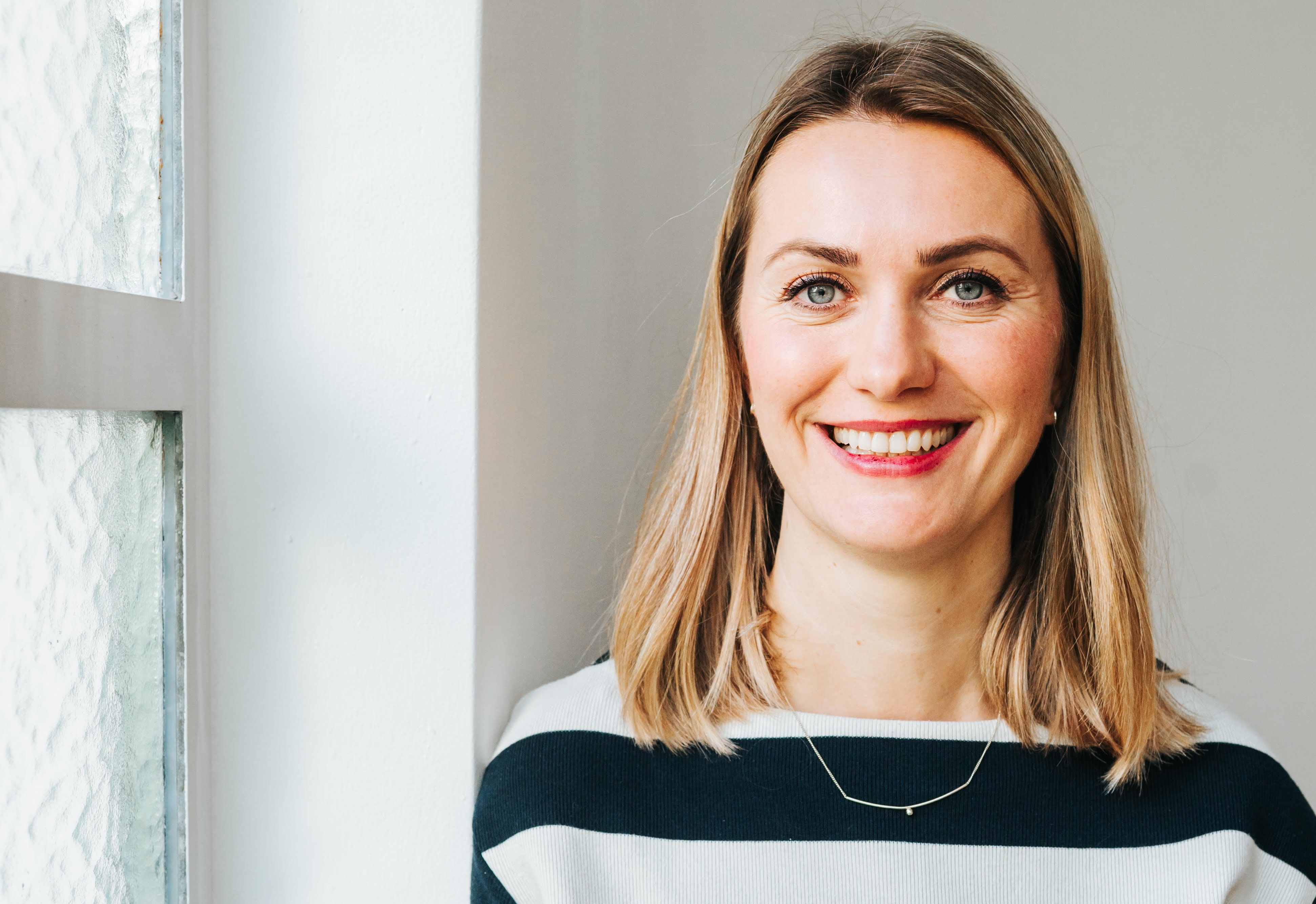
The Slova 21 project, titled Strengthening Intercultural Competencies, helped civil servants better understand people from different cultural backgrounds and manage the situations they encounter in their work. Through experiential training, they worked with their own experiences, encountered the personal stories of people who have come to the Czech Republic, and practiced situations from their perspective. The project concludes this August. In this interview, Kateřina Kopečná, the project's lead methodologist, discusses the project's progress, her experience as a trainer, and why there is no universal guide to communicating with others.
"Strengthening intercultural competencies" sounds a bit abstract. Could you give us some concrete examples of your goals?
It is important to mention that the training had two parts—an introductory session and a follow-up. The main goal of the introductory training was to help participants familiarize themselves with the topic of different cultures and communication. It was an experiential training combined with theory, as having a factual foundation is important for further work. The introductory part provided a basic overview of migration and helped place the topic in a broader context. It was also an opportunity to meet people who live in the Czech Republic but came from elsewhere, talk to them about their experiences, and ask them questions. Part of it also involved reflecting on how we form perceptions of others. Both training sessions were focused on making the participants' work as easy as possible and helping them better understand challenging situations. At the same time, they showed that ways of thinking and communicating can differ across cultural contexts—and that is exactly what is important to consider in practice.
So, if I understand correctly, the training aimed to foster a safe communication environment for both sides?
Yes, we focused on different communication styles. When a person isn't prepared for them, it can be difficult to interpret them correctly. For example, some cultures may be more direct in their communication than we are used to. This can easily come across as unexpected or unpleasant to us. We often have a tendency to interpret such situations negatively or personally. That is why we worked with participants on developing intercultural sensitivity. We looked at what is normal for us, what might be set differently for others, and how to respond to these differences in practice. Sharing experiences with the participants was important for us as trainers, too. We met many civil servants, and their approach enriched us greatly. After conducting a large number of training sessions, we have a lot of respect for their work. It turns out that most people primarily want to do their job well, help others, and function without unnecessary conflict, even though they often find themselves in difficult situations.
So, did you offer participants any universal approaches on how to be open or empathetic in communication?
Yes, we drew on basic communication techniques built on mutual respect. These are based on current concepts in the field of intercultural communication. It is always about reaching an understanding, but it is not always just about a language barrier—attitude plays a huge role, as does whether we actually want to reach an understanding. Sometimes we might feel that the other person doesn't want to communicate with us because they are giving us a certain signal, but even that can be due to the cultural context. The follow-up training was more focused on specific communication situations, and many participants reflected that they could use the acquired approaches in their everyday lives and work, not just in relation to foreigners. At the same time, we always tried to add an intercultural perspective. We often agreed that people are not the same, everyone is unique, and therefore there are no universal communication tools. Different things work for different people, so we offered participants various techniques and approaches that they could use in their practice as needed.
One of the ways you taught was by letting the participants experience the situations that people coming to the Czech Republic face.
The point was to try to see what it might be like from the other side. Participants tried to imagine what it is like to move to a new country. They made a list of things that need to be arranged and thought about where to look for information and who to turn to. Part of it was also reflecting on how they would feel in such a situation and what would be the hardest part for them. Everyone could thus at least partially imagine what such a change entails and connect it with their own experiences and feelings. Through feedback, we learned that this part was particularly interesting and enriching for many of them. At the same time, those who have experience living abroad, travel often, or came to the Czech Republic from another country also joined in the sharing, which allowed them to add their own specific experiences to the discussion.
What role did the guests who came to the training to share their experiences play?
The participants appreciated having the opportunity to learn how guests with a migration background think and how challenging life in a new country can be. Thanks to this, it was possible to gain insight into situations they don't normally encounter and better understand their context. I am very grateful to all the guests who collaborated with us. Some of their life stories are not easy at all, yet they share them with others. It was precisely because of them that the training had such a strong impact and human dimension. Gradually, we succeeded in creating a safe environment where they could speak more openly about their experiences. It turned out that personal encounters really help in perceiving things in a broader context.
What was it like working with participants who attended the training more out of obligation?
We tried to be as attentive as possible and dedicate time to all participants—even before the training started or during breaks—so we could build a rapport with them. It was a great advantage that the training took place over two days with an overnight stay. This created space to talk informally—during lunch, dinner, or over breakfast in the morning. When you manage to build a relationship and get to know each other better, communication becomes much more open. We found the question, "What do you need to take away from this training?" to be very effective. Even if someone had come out of a sense of obligation, they eventually found something useful or interesting. Gradually, many people started coming based on recommendations from their colleagues, which was lovely. They often returned for follow-up training, and we would greet each other like old friends—I still smile when I think about it today.
What was your experience with facilitating?
At first, it was a huge challenge for me because I wasn't used to this format. I remember my colleagues and I made plenty of mistakes in the beginning, but we gradually learned from them. Together with my fellow methodologist, Veronika Slavíková, we made it a habit to break down every training session in detail—looking at what went well, what we were happy with, and what we needed to be careful about. We also provided feedback within the facilitation team and learned from each other, which was incredibly beneficial. Thanks to this, the training was constantly evolving and remains dynamic. Even so, I still approach it with great humility. I wouldn't say nothing surprises us anymore—on the contrary, every training session brings new situations. And that is actually the most interesting part for me.
It’s great that it was a positive experience for you as well.
Absolutely! In closing, I would like to offer a big thank you. It was a truly large and demanding project, and its success was due to a whole range of people. The facilitation team was an important part of the project—including Monika Marquez, Pavla Yakymchuk, and many others who joined over the years, bringing their experience and energy. I also deeply value my collaboration with my methodological partner, Veronika Slavíková, who was absolutely key to the entire project and a great support and inspiration to me personally. We were able to focus on the content and working with the participants because we had a strong support system, primarily thanks to Zuzana Pudilová, who held the project firmly in her hands and dedicated an enormous amount of time to it. A big thank you also goes to our wonderful assistants, Helena Černá and Dana Pilařová, who took such great care of us. I also have to mention all our guest speakers and, above all, the participants who took part in this unconventional format—often repeatedly—and were willing to step out of their comfort zones. And many thanks to the organization Slovo 21 for running the project for so long. We are very hopeful for some form of continuation if funding can be secured. Currently, at Slovo 21, we are preparing a similar training focused on Roma issues. It’s another challenge for us, and we are already looking forward to what it brings.
The Strengthening Intercultural Competencies project, which ran from March 1, 2024, to August 31, 2026, successfully met its goals. During this time, a total of 53 two-day training sessions were held across the Czech Republic—from Prague, Brno, and Ostrava to Ústí nad Labem, Pardubice, and Olomouc. As a result, 800 employees from key institutions went through the program, including the Ministry of Labour and Social Affairs, labor offices, the Foreign and State Police, the Refugee Facilities Administration, the Department for Asylum and Migration Policy (OAMP), the State Labour Inspection Office, and the municipal authorities of major cities including Prague, Brno, Ostrava, and Frýdek-Místek.

Related projects
Strengthening Intercultural Competencies
Better communication is the key to fewer misunderstandings. We help public administration and security personnel improve their communication skills when working with third-country nationals. Our training allows them to view certain situations from the perspective of a foreigner, which fosters greater understanding.
