"My parents met in a concentration camp." In the production Words 21, Jozef Miker also opens up a painful chapter of Romani history
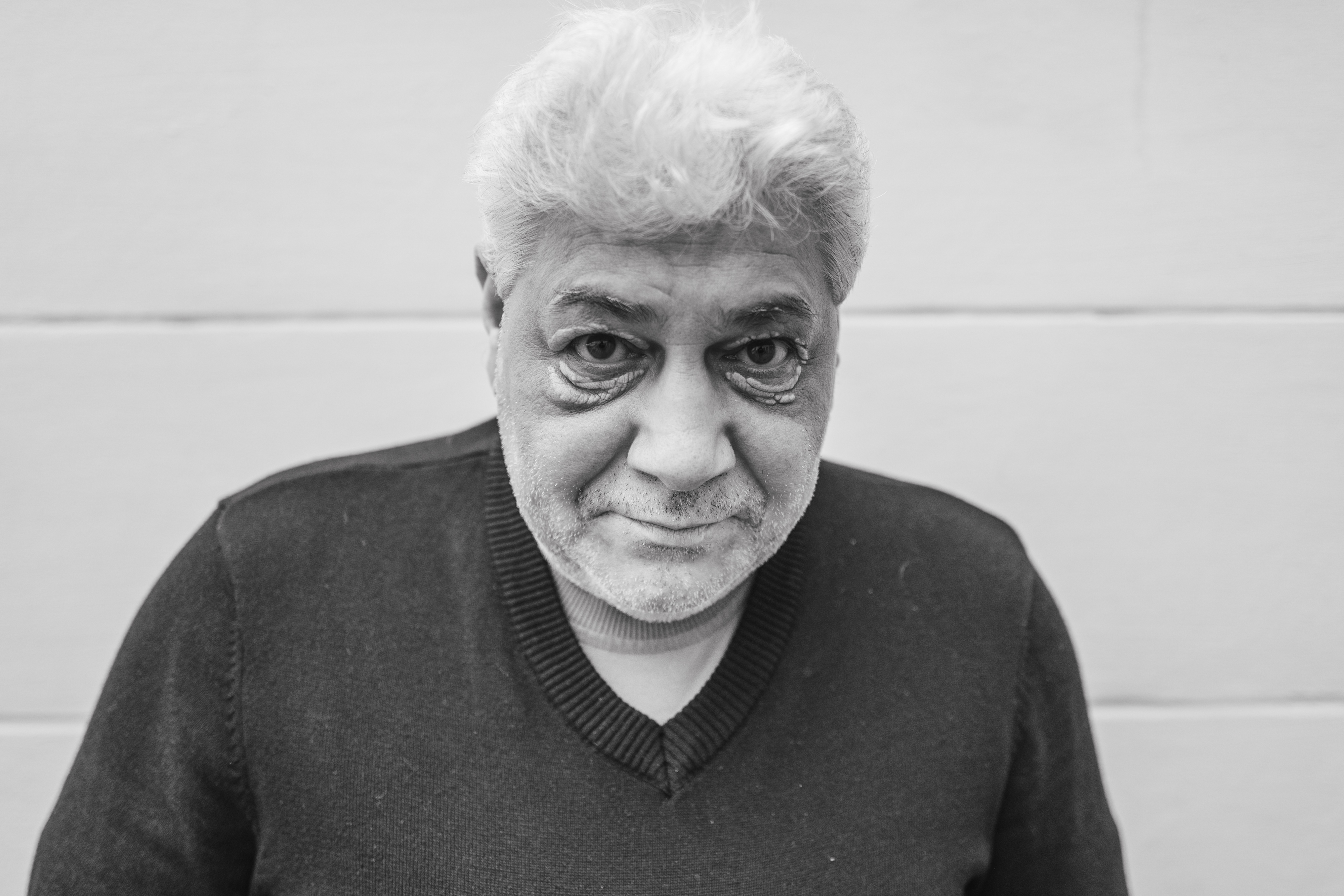
He spent over thirty years working in a coal mine. But Jozef Miker decided to dedicate an even greater part of his life to fighting neo-Nazism and racism. In fact, he recently received an award from the Museum of Romani Culture for his lifelong contribution to the Romani community. His path as an activist has even led him to the stage. In the Slovo 21 production, he speaks about his family history and his own experiences with racism. The production Stories of Survivors highlights past and present injustices and features descendants of Romani Holocaust survivors.
You are one of the prominent faces of the fight against racism in Northern Bohemia. Are there any protests or initiatives that you still remember today?
For instance, how we blocked a hostel in Ústí nad Labem. At the time, they wanted to kick the Roma out of the hostel, and we didn't have alternative housing or money for deposits for them yet. We couldn't let them be thrown out onto the street. We were barricaded inside for fourteen days. There were fifty families with us, and we were cooking for them inside. They cut off our water, gas, and electricity. And this was in February.
So you were freezing there...
I got double pneumonia, and a lot of people there froze. But we didn't give up. People supported us, supplied us with food, and sent us money. Then it actually happened that Jelena (director of the organization Slovo 21, Jelena Silajdžić) gave the people from the barricade free tickets to Khamoro so we could all take our minds off things. We’ve been friends with Jelena ever since. Later, she also offered me a role in this theater. Because she knew me as a fighter for human rights and for the removal of the pig farm in Lety u Písku. I fought for that for twenty years. And also because I have something to say about the Romani Holocaust.
Your parents went through a concentration camp...
Yes. They met as children in the camp in Dubnica nad Váhom in 1942. They were nine years old at the time. They were supposed to be going to school, and instead, they were put in a concentration camp. That love lasted until my father's death.
Was it talked about at home?
Of course. My parents used to tell stories at home, especially during those long winter evenings when my dad came back. We lived in eastern Slovakia, and my dad worked at a mine all the way in Ostrava. He’d only come home every once in a while, and that’s when the stories would start. Later on, we moved from Slovakia to northern Bohemia. Something happened then. My dad came home from Ostrava, put his suitcases down, and went to check on the farm. When he came back inside, my mom gave him some soup, we greeted each other, and suddenly my dad grabbed an axe and went after a man he’d spotted in the neighbors' garden. We didn't know why. It wasn't until the police arrived that my dad explained the man had killed his grandparents right in front of his eyes and sent him and the rest of his family to a concentration camp. The police investigation later confirmed that the man really had been a commander of the Hlinka Guard in the town where my dad used to live.
And did they arrest him?
They did, but his family kept living there, and my dad couldn't stand it, so he arranged a transfer to a mine in Teplice. We bought a house in Teplice and stayed there. He didn't want to live and look at the same people who had killed Roma people, only for them to suddenly become communists and continue bullying and harassing everyone.
So, were these family stories and your own personal experiences with racism incorporated into the theater production?
Yes, nothing in it is made up. There’s no script. We’re essentially just telling stories that our parents or grandparents told us, along with things we’ve experienced ourselves. And honestly, everything that happened in the nineties, when racism and neo-Nazism were on the rise in the Czech Republic, was reflected in it. For example, I talk about my mother. About how she ended up in a psychiatric ward. That happened when she saw five hundred neo-Nazis in black jeans marching through the city. On top of that, they were introducing the municipal police in Teplice at the time, and they wore black too. She couldn't tell who was who anymore. And most of all, it brought back memories of the guardsmen marching and beating people during the war.
The nineties were very cruel in that regard...
If you think about it, from 1992 to 2015, sixty-two murders were committed by neo-Nazis. Or look at what was happening in the Šluknov Hook. Week after week, there were marches against the Roma. They wanted to burn Roma people alive. It actually happened that a child was looking out the window and pointed out that they could see their school teacher on the street. She was walking in the protest, shouting, "Burn those black swine!"
Do you feel that the situation in northern Bohemia is changing at all? As far as racism is concerned...
I’ve been watching it for thirty years, and I think it’s changing for the better. You can see it. It’s not like it was in the nineties or even later. Up until 2015, it was really bad. But now, over the last ten years, it’s much better.
Returning to the production *Stories of the Survivors*, what was it like for you to become an actor?
If they had just come up to me and handed me a script, it probably would have been a problem. But we trained for a week. We prepared for it. So, by the time we had to perform, it didn't even feel like a big deal anymore. I was calm. And Líza and Dana (the instructors Líza Urbanová and Dana Moree) are excellent teachers.
What are you taking away from these performances so far?
It’s getting better and better. It depends on who you’re performing for. I enjoy performing for young people, especially school groups, because for many years I worked as a "living book" for Amnesty International. You go around to schools and tell girls and boys about your life and whatever they’re interested in. That got a great response. And I still go to give talks at high schools and places like that. Discussions, storytelling. So, I like being around young people. It’s a joy to be able to pass something on to someone.
So, do you consider it important to pass this testimony on to young people as well?
I’ll put it this way. When I first gave a lecture in 2010 at Charles University for a friend in the political science department, everyone looked at me a bit strangely. But when I lectured at Charles University three years ago for the anthropology department, students came up to me after the lecture and said, "Mr. Miker, we apologize to you." I didn't understand, so I stood there and asked, "What are you apologizing for?" And they replied, "We apologize for the fact that our parents are racists."
This interview was created as part of the Survivor Stories project, supported by the Foundation Remembrance, Responsibility and Future (EVZ).
This text does not express the opinion of the EVZ Foundation. The author is responsible for all claims contained in this text.

Related projects
Stories of Survivors
The Romani Holocaust is one of the darkest chapters in Romani history, yet it is rarely discussed. Through an exhibition, an educational program, and a theatrical performance, we aim to confront this historical injustice and reflect on the contemporary understanding of Romani history and the Holocaust in the Czech Republic.
.jpg)