From Afghanistan to Prague’s Vršovice. Mr. Sultani’s new beginning with his own bistro

He fled his native Afghanistan under dramatic circumstances as the Taliban advanced. Mr. Sultani arrived in the Czech Republic as a recipient of international protection. Navigating a new and complex system, finding a job, and understanding how daily life works was not easy. It was during this time that he joined our New Home project, which helped him organize information and take his first steps in a new reality. Today, he runs his own bistro in Prague’s Vršovice district, serving food every day that connects Afghanistan with his new home.
Snow is falling on Vršovice in early December. The bistro window near Vršovické náměstí glows with yellow light onto the street. Mr. Sultani and his wife are serving guests who have come in for a late lunch. "That’s a neighbor," he explains when a woman orders her usual. The bistro’s menu combines classic kebabs with traditional Afghan dishes. Mr. Sultani sits down at a table and pours black tea into small cups. He has returned to the bistro straight from the Faculty of Arts at Charles University, where he is studying Czech for foreigners. I ask him how he remembers the Slovo 21 New Home course he attended a few years ago.
A course that should have come sooner
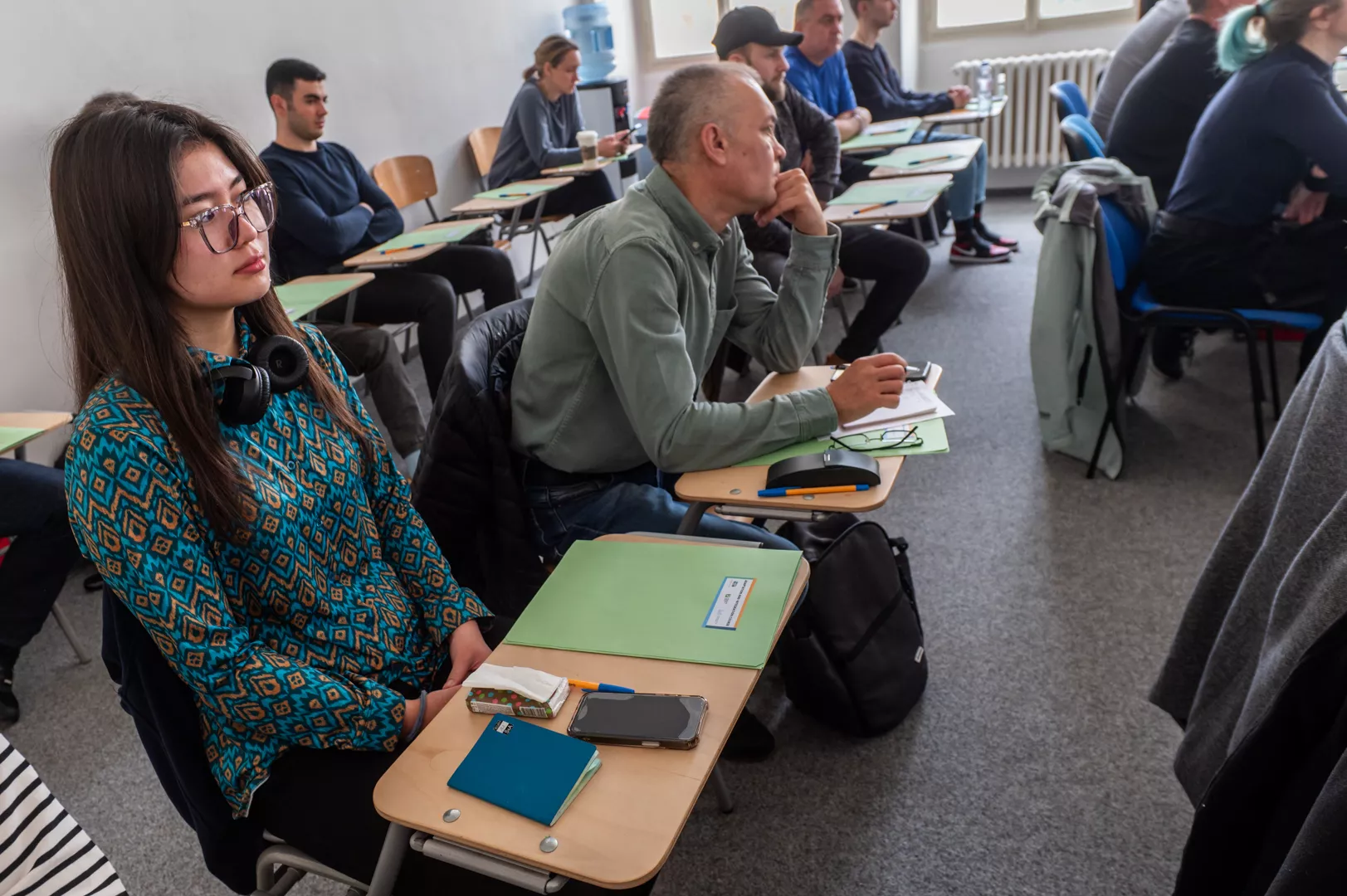
He explains that it was an eight-hour course organized specifically for people arriving in the Czech Republic from Afghanistan. Besides Mr. Sultani, there were about ten other people there. "It would have been better if it had happened sooner, rather than after I had already been living in Prague for several years," he adds. "But even so, the information was relevant and useful. And not just for me, but for everyone else who had plenty of questions about topics like support and other matters." The courses are for recipients of international protection, and they aim to provide newcomers with information they might be missing for their integration into Czech society in a sensitive way. The instructors are specially trained to work with this specific group of people and provide them with necessary information about life in the Czech Republic—such as the social system, job hunting, or housing.
Mr. Sultani recalls the things that were hardest for him at the beginning of his life in the Czech Republic. Often, however, his thoughts drift back to his life in Afghanistan and everything he had to leave behind. Before emigrating, he worked at the Czech embassy and lived a comfortable life in the capital, surrounded by his family. But from 2020, the situation in the country began to deteriorate. Because of his work at the embassy, he started receiving threats from the Taliban. The situation quickly led to the forced evacuation of the entire embassy. Mr. Sultani talks about leaving the country in haste and stress. "At one in the morning, after hours of organizing our departure, we were sitting on the plane, in the air, looking down at the city as the Taliban were moving in."
A bistro as a new beginning
No course can help newcomers cope with the loss of their country. It can, however, offer a helping hand with the obstacles that await them in a new environment. Mr. Sultani recalls, for example, the difficulties of finding work. "I must have sent out a thousand resumes, but I still couldn't find a job. Especially because I had trouble with the language," he notes. That is also why he decided to attend intensive Czech language classes at the university. The inability to find work eventually led him to open his own bistro, which he now runs with his wife and brother.
"To be honest, my experience with the Czech Republic and the people I’ve met here is good. Everyone here has treated me fairly, and so I would recommend the Czech Republic as a good place to live. But at the same time, it is also difficult. It’s hard to find a job, learn the language, and get used to cultural differences. Only when you emigrate do you realize how complicated everything suddenly is," Mr. Sultani concludes his story. We say goodbye over a final cup of tea. Outside, the snow is already falling into the darkness.
This interview was created as part of the New Home in the CR 2024–2026 project, which is co-financed by the European Union.
Our Partners

Related projects
Your New Home in the Czech Republic
An unfamiliar country, traumatic experiences, emotional burden, a lack of information, and an uncertain future: these are all challenges faced by holders of international protection. Through our integration seminars and a comprehensive publication, we strive to provide sensitive support to help them integrate into Czech society.