Even though they grow up without a family, they have dreams. Slovo 21 helps Romani children from children's homes
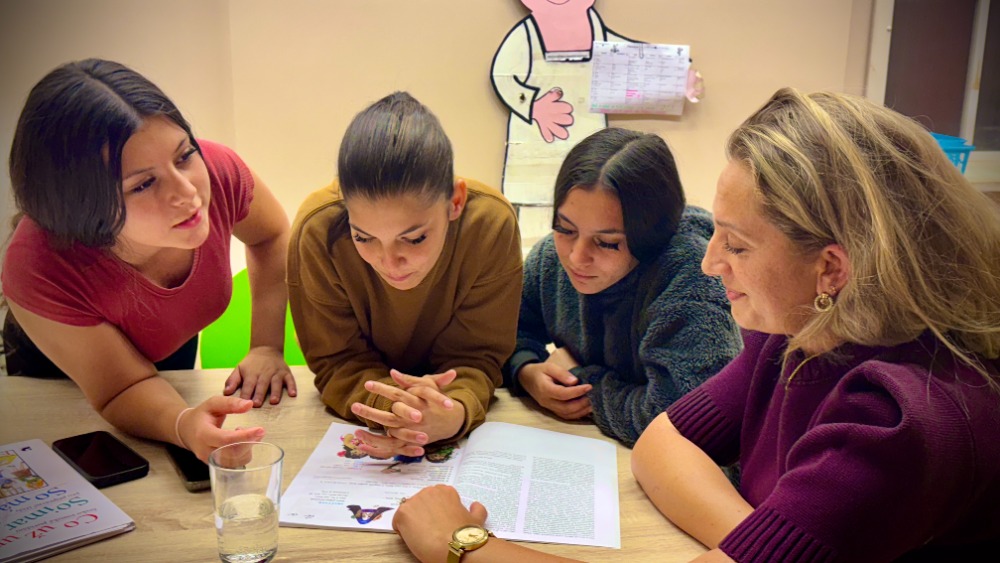
They don't grow up in "typical" families. But that doesn't mean they lack ambition, talent, or the drive to work on themselves. Our Avela project supports Roma children in their education and development across the Czech Republic – and some of its activities are focused on those living in children's homes. In addition to tutoring, mentoring, and extracurricular activities, we also offer them lessons in the Romani language. We are currently helping sixteen children in children's homes in Česká Kamenice and Potštejn. We show them that they are the only ones who can shape their future. Regardless of where they come from or where they grew up.
I want to be like Robert
Roma children in children's homes often have a harder time than their peers who grew up with their biological parents. Beyond the prejudices associated with their background, they grow up without a stable family environment – and often without people they can look up to. That is one of the reasons why educated Roma serve as tutors in the Avela project.
"These children need to see role models. When successful young Roma who have finished school and have concrete achievements stand before them, it is a huge motivation. Suddenly, they want to achieve the same things and fulfill their own dreams," says Robert Tonelli, coordinator of activities for Roma children in children's homes. A middle-aged Roma man who went through the institutional care system himself, he now helps children who are starting from a similar place to where he once stood.
The children attending tutoring range from primary school students to high schoolers, as well as those preparing for their final exams or university entrance tests. "I get tutoring in math, English, Czech, and social studies. And I think it's helping because my grades are already better," smiles eleven-year-old Matyáš. Ten-year-old Jaroslav says much the same: "I'm doing better in school now."
Even though Avela has only been running in children's homes for a few months, the impact is already noticeable, according to Robert Tonelli.
"I see how the children are changing. They are more confident, they ask more questions, and they think more about their future," he says. For him, the greatest reward is when the roles are reversed. "When fifteen-year-old boys tell you they want to be like Robert and that they would also like to help children in children's homes one day, you know it makes sense. What could be better than that?"
Romani as a path to self-discovery
"Could we maybe learn Romani, too?" We were happy to grant the wish of the children in the homes. It wasn't a coincidence. Children growing up outside their own families are often searching for answers to the questions of where they belong and who they are.
"I want to learn Romani. After all, I'm Roma," says sixteen-year-old Ondra. "It's important to me, and I'm glad Avela makes these Romani lessons possible. Plus, they're fun – for instance, I had no idea until now that there is no 'y' in the Romani alphabet," he laughs. Kristýna is also clear about her goals: "I already know a few words, but I want to speak it fluently. Because Romani is a part of who I am."
Teaching Romani brings the children more than just a new language. It helps them find their footing, gain more confidence, and define their own identity, which is often just as important for children in care as academic support.
"In the home, they often don't have anyone to guide them in Romani. Yet, language is crucial for their identity. These children are searching for themselves; they often don't know where they belong. And Romani can help them with that," explains coordinator Robert Tonelli.
Language learning is not just about new words. It is about the relationship with oneself and understanding one's roots. It is about realizing that Roma identity can be a source of strength, not shame.
Avela has already supported 200 children across the country
The Avela project operates in 13 cities across the Czech Republic. We have already involved approximately 200 Romani children in our activities. Among other things, we help them get a head start in preschool and school, provide tutoring, prepare them for high school entrance exams, and motivate them to continue their studies. We also offer them a mentor—an older friend they can look up to and spend their free time with in a meaningful way.
"Romani children still do not have the same opportunities as others. Avela is changing that, at least in part, directly in the field. We see it every day in the children we work with. Our greatest joy comes from their successes—when they start doing well in school, when they gain self-confidence, or when we simply see that they are proud of what they have achieved," explains Milan Kuna, project coordinator at Slovo 21. "And what's more, we have secured funding for four years, which is fantastic. Thanks to this, we can help the children long-term, and it has a real impact."
Avela builds on more than twenty years of experience at Slovo 21 in tutoring Romani children and youth. Over two decades, more than a thousand Romani pupils and students have passed through our organization, and 150 of them have gone on to university. They are now working in the positions they once dreamed of.
This article was created as part of the Avela project, which is co-financed by the European Union.
Our Partners

Related projects
Avela
We motivate and support Romani children and youth to discover how education can change their lives. Through the Avela project, we provide pupils and students not only with tutoring and mentoring but also with a wide range of extracurricular activities to help them develop their potential and broaden their horizons.
.jpg)