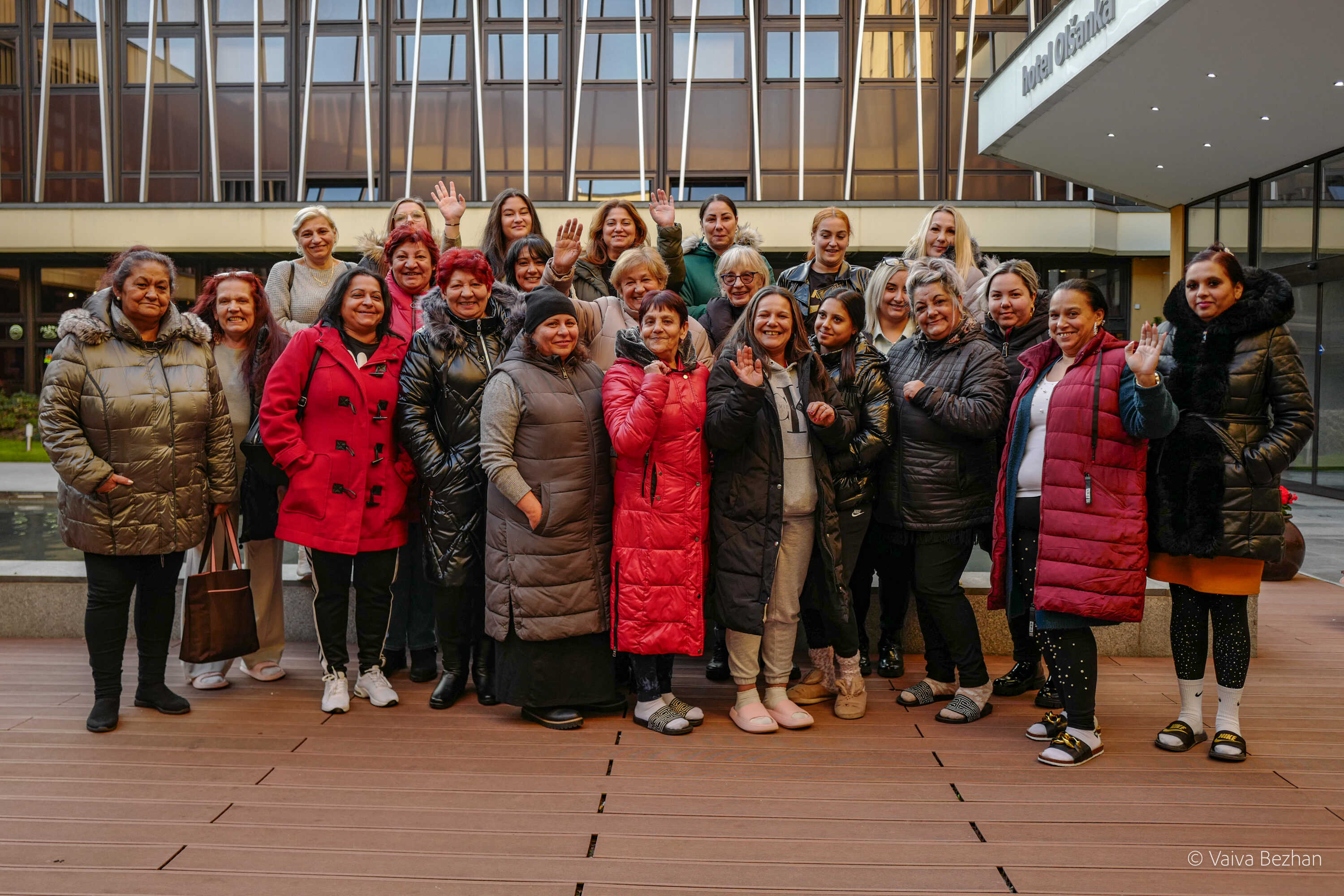
Speaking up makes sense. Romani women at the Slovo 21 meeting shared their successes and the obstacles they face in the fight against domestic violence.
.jpg)
Domestic violence in Romani communities, anti-Gypsyism in the Czech Republic, and finding one's own strength. These were the exact topics addressed at the end of January during a meeting for our project, Speak Up to Be Heard. Twenty Romani women from various parts of the country—including Náchod, Písek, Broumov, Chodov, and Chomutov—traveled to Prague to attend. They shared their experiences and spoke openly about the issues currently affecting women in their communities the most.
The Norwegian Ambassador, Snøfrid Byrløkken Emterud, and Irena Hůlová from the Office of the Government Commissioner for Human Rights also attended part of the program. "It is important for us to meet like this at least every six months and talk openly about what women are actually dealing with in their towns. What is working, but also what is still hindering change," explains Claudie Laburdová, coordinator of the Speak Up to Be Heard project. The project focuses on the prevention of domestic and gender-based violence in Romani communities.
Slovo 21 has been working intensively on this topic since last year—as one of the few organizations in the Czech Republic to do so. In our Speak Up campaign, we gave a platform to the real stories of Romani women who have experienced domestic violence. Their testimonies are featured in podcasts and video spots narrated by well-known Romani figures.
Breaking the Taboo
"We have received a lot of positive feedback from women. They say it is important that domestic violence is finally being discussed openly and without sugarcoating," says Claudie Laburdová regarding the recent awareness campaign on domestic violence prevention. According to her, some women are even coming forward themselves, expressing a desire to get involved in similar activities in the future because they feel it is necessary to talk about the issue.
The participants of the January meeting agree. "In Písek, domestic violence is addressed, but often only behind closed doors," says Věra Fakolová. Anna Farkašová from Broumov sees it similarly: "Women are ashamed. It is incredibly difficult for them to come forward or confide in someone. That is exactly why it is so important to speak about it out loud."
These words are confirmed by data from recent exclusive research by Slovo 21, which provided the first comprehensive look at violence against Romani women in the Czech Republic. It reveals that nearly 30 percent of Romani women have personal experience with domestic violence. Furthermore, more than half of the women stated that they encounter it repeatedly in their surroundings. Yet, only a minimum of them seek help from institutions—most often, they confide in relatives or remain silent.
Manushe: A network of women supporting one another
The January meeting was attended primarily by members of the long-term women's network Manushe, which connects roughly two hundred women across the country. It is not a formal membership, but rather a vibrant network of Romani women who know each other, support one another, and get involved in various activities based on their interests and capabilities.
"Manushe has definitely boosted my self-confidence. I feel like my voice is finally being heard more," adds Věra Fakolová from Písek. The group's motto is education, self-confidence, and emancipation. Manushe has been operating under the umbrella of Slovo 21 since 2000. During that time, they have been behind a number of significant projects—such as political training for Romani women, the documentary film *Women in the Field*, and the successful music video *Don't Be a Fool!* by young rappers, which highlights the risks of prematurely placing Romani children into special education schools.
Blanka Voráčová from Chodov appreciates the practical dimension of the group: "We address topics that aren't talked about much in society. Like domestic violence in the Romani community. And at the same time, we support each other here." Anna Farkašová from Broumov agrees. According to her, Manushe is important mainly because it strengthens the position of Romani women not only in mainstream society but also within the Romani community itself. "Every woman should know that she is important. That is the only way we can be strong."
The Speak Up to Be Heard project is funded by the European Union.
Related projects
Speak up so you can be heard
Domestic violence against women must be discussed openly. This is especially true in the Roma community, where the topic has long been a taboo and is frequently downplayed. Our exclusive research revealed that nearly a third of Roma women in the Czech Republic have personal experience with domestic violence. We want to address a topic that has been silenced for too long. We want to empower the voices of women that were once suppressed.